
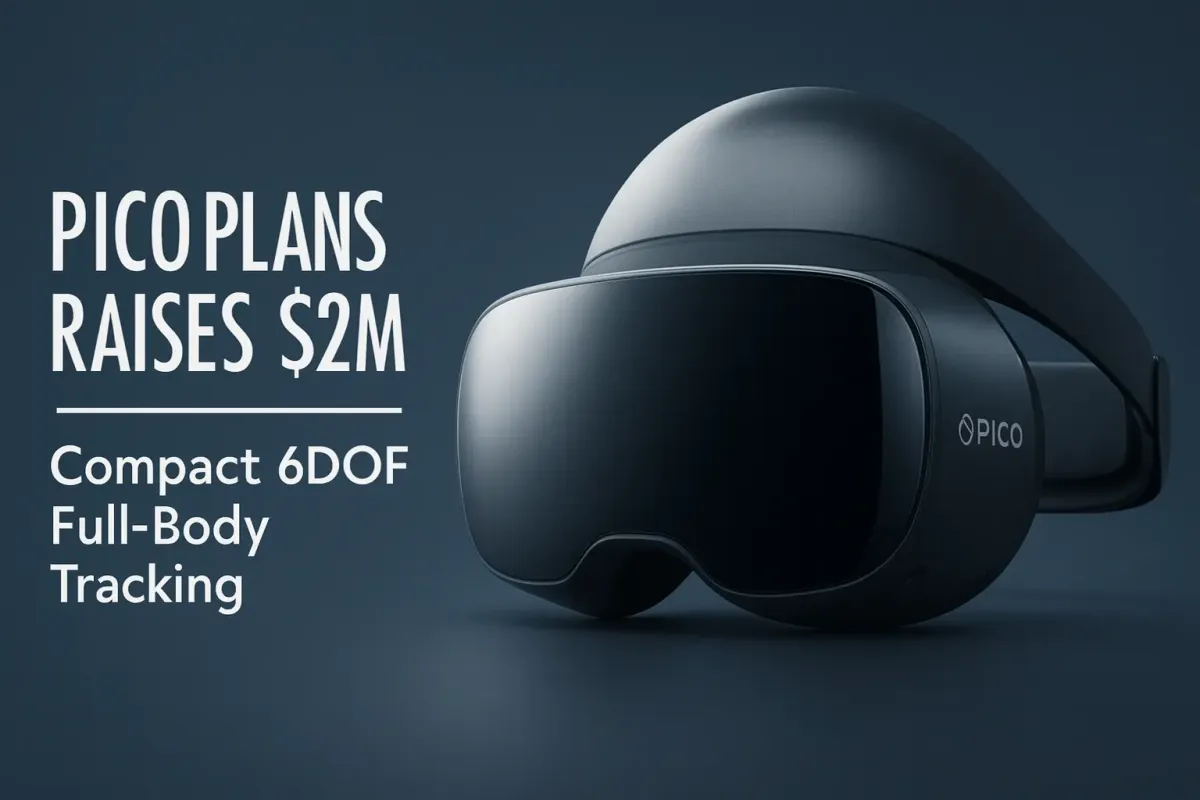
🚀 PICO Fires a Shot Across Apple's Bow: Developing Vision Pro Competitor for 2026 Release with Proprietary Chip
PICO, the VR division owned by ByteDance, is intensifying its efforts in the high-end virtual and augmented reality market. While Meta focuses on mass-market accessibility, PICO is reportedly aiming squarely at the premium segment, planning to release a headset designed to compete directly with the Apple Vision Pro in 2026. This ambitious project signals a major shift in PICO’s strategy, moving from primarily competing with the Meta Quest series to challenging the industry’s most expensive and technologically advanced device.
The Strategic Shift: Targeting the Premium End
The report, citing statements from Zhenyuan Yang, Vice President of Technology at PICO parent company ByteDance, reveals that PICO's next XR headset will feature specifications aimed at the very top of the consumer and enterprise markets.
- Self-Developed Chip: The cornerstone of this new strategy is the development of a proprietary, self-developed chip. This is a critical move that mirrors the strategies of Apple (M-series) and Meta (custom chips for future Quest devices). By controlling the silicon, PICO can:
- Optimize Performance: Tailor the chip architecture specifically for the demands of high-resolution VR/AR processing, latency management, and complex computer vision tasks.
- Reduce Reliance on Third Parties: Less dependence on Qualcomm for key components allows for better supply chain management and cost control in the long run.
- Enable Unique Features: Integrate specific features necessary for high-fidelity Mixed Reality (MR) that standard chips might not efficiently support.
- Cutting-Edge Display Technology: The upcoming headset is slated to feature a self-developed display chip and 4K MicroOLED displays. MicroOLED (Micro Organic Light-Emitting Diode) technology is known for its incredible pixel density, high brightness, and true black levels, making it ideal for the premium VR experience that minimizes the "screen door effect."
📝 Competitive Comparison: PICO (Reported 2026 Plan) vs. Apple Vision Pro (2024)
The development plan for PICO's high-end headset, intended to directly challenge the Apple Vision Pro, demonstrates a strategic alignment in focusing on core performance and advanced display technology, though with key differences in processor sourcing:
- Processor:
- PICO (Reported 2026): PICO plans to utilize a Proprietary/Self-developed Chip, emphasizing the ability to specifically optimize hardware and software for high-fidelity XR demands.
- Apple Vision Pro (2024): The device relies on a combination of the powerful Apple M2 and R1 Chips, with the R1 dedicated to real-time sensor processing.
- Display Technology:
- PICO (Reported 2026): The headset is slated to feature a Self-developed Display Chip and 4K MicroOLED displays, which provides the necessary pixel density and black levels for premium immersion.
- Apple Vision Pro (2024): Also uses MicroOLED technology with extremely high resolution, focusing on visual fidelity and clarity.
- Market Segment:
- PICO (Reported 2026): The target is the High-end Consumer/Enterprise segment, aiming for professional and enthusiast users.
- Apple Vision Pro (2024): Similarly targets the High-end Consumer/Enterprise market, reflected in its price point and advanced feature set.
- Key Advantage:
- PICO (Reported 2026): The primary advantage lies in the integration of custom hardware and software for potentially better long-term cost-efficiency and performance tuning.
- Apple Vision Pro (2024): The strongest advantage is its deep integration with the Apple ecosystem and industry-leading software polish.
While PICO may match or even exceed Apple on raw hardware specifications (such as potentially higher resolution displays or a more optimized chip for VR rendering), its greatest challenge will be the ecosystem. Apple has the App Store and a seamless connection to Mac, iPhone, and iPad users. PICO must aggressively build out its software library and developer base to make its premium hardware worthwhile.
PICO's Market Strategy: The ByteDance Edge
PICO’s owner, ByteDance (the company behind TikTok), brings immense financial backing and algorithmic expertise. This allows PICO to weather high development costs and potentially leverage its media and social platforms to drive adoption. If PICO can successfully deliver an aesthetically and technically superior product at a potentially more competitive price point than Apple, it could establish a strong foothold in the lucrative enterprise and high-fidelity enthusiast markets.
This move confirms that the future of VR is bifurcating: a budget/mass-market segment dominated by Quest, and a high-end, technologically demanding segment where PICO is preparing to fight the giant of Cupertino.