
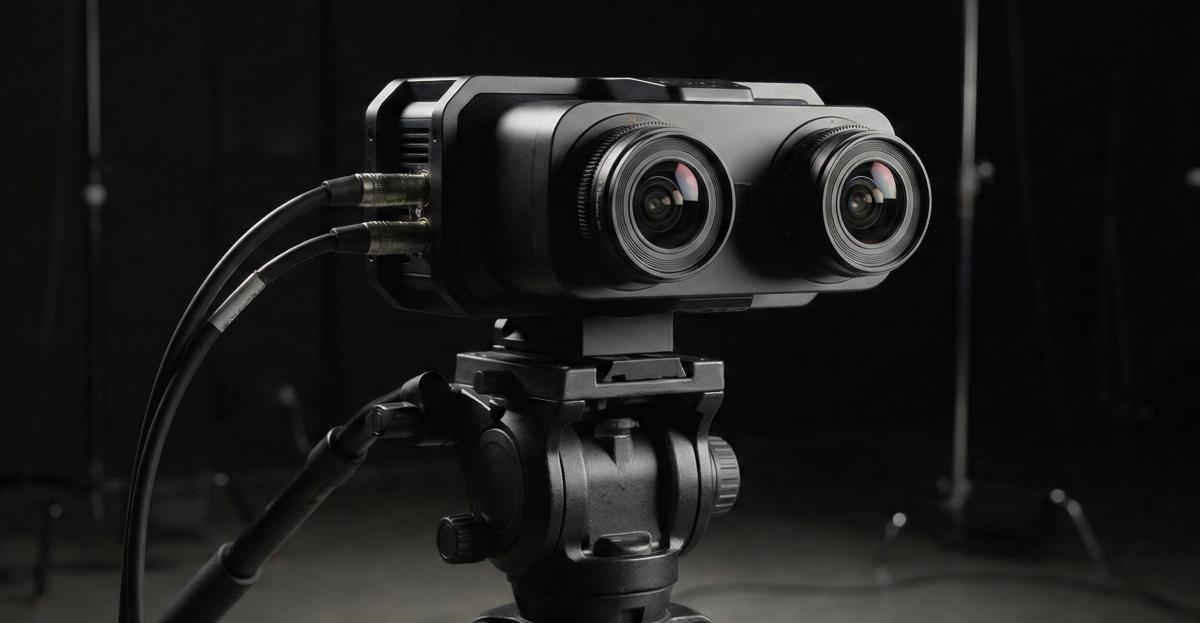
It seems like everyone in 2026 is talking about Volumetric Video and true 6DoF (Six Degrees of Freedom). On paper, the concept is amazing: instead of just pixels, you capture real-time 3D data. You aren't stuck in one spot anymore; you can lean in, move around, and look at the subject from different angles.
It is the dream feature for immersive content. But from an engineering standpoint, we need to be realistic about where the tech actually stands.
The Bandwidth Bottleneck Moving to true volumetric isn't just about buying new cameras. It is an infrastructure nightmare. A high-fidelity volumetric stream demands bandwidth that would choke most standard home internet connections. We are talking about file sizes that are exponentially larger than current 8K video.
The "Uncanny Valley" Problem There is also the issue of realism. Right now, fully generated 3D models—even the expensive ones—still struggle to look completely human. Skin textures can look plasticky, and physics often feel slightly off.
Compare that to a high-end optical capture using Stereoscopic 180°/360° VR. It captures real light, real textures, and real movement. The fidelity is simply better.
Optimizing What Works That is why, for now, Stereoscopic VR remains the gold standard for realism. The smart play in 2026 isn't forcing a switch to experimental formats; it is about squeezing every bit of quality out of the current ones.
We are seeing huge jumps in quality just by using better compression codecs and AI upscaling tools. These tools make existing VR video look sharper and smoother without forcing users to upgrade their hardware or fiber plans.
The Bottom Line 6DoF is coming, sure. But until the global internet infrastructure catches up to the hype, the best immersive experience comes from mastering video quality, not just adding more camera angles.